
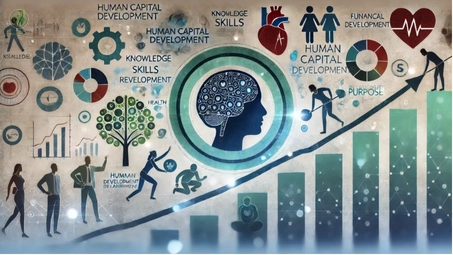
The government’s announcement this week of the Human Capital Vision is one of the most ambitious plans for reforming education and the workforce ever. The Human Capital Vision is a national plan for progress that aims to greatly improve literacy, make higher education more accessible, and make the country’s overall learning environment stronger by 2030. The Human Capital Vision is described by officials as “a transformative path to future-readiness and economic competitiveness.”
Human Capital Vision 2030 – Main Areas of Change
The government wants to update the education system from preschool to advanced degrees under the Human Capital Vision. The plan is to build strong foundations, give young people skills that will help them in the future, and make an education system that meets global standards and is open to everyone.
The Human Capital Vision is based on a few key ideas:
- Getting 95% of the people in the country to read and write
- Increasing the number of students in higher education by at least 40%
- Making teacher training and digital readiness stronger
- Putting more money from the government into schools
- Improving skills development, research, and innovation
Policymakers say that the Human Capital Vision depends on planning based on data, partnerships between different sectors, and long-term resource allocation to make sure that progress is sustainable.
The Human Capital Vision’s Ideas About Governance and Responsibility
The Human Capital Vision is supported by a strong governance model. The Ministry of Education will make its monitoring system bigger, make sure that all teachers are evaluated in the same way, and add digital data dashboards to make things more open.
These steps, according to education analysts, make sure that the Human Capital Vision is not just a dream but a reality.
Literacy and Basic Skills Development in the Human Capital Vision
The Human Capital Vision starts with the basics: reading and writing. The government has made a 10-year literacy plan part of the Human Capital Vision because they know that being able to read and write well is important for future learning.
Some of the most important things are:
- Hiring 50,000 new trained primary school teachers
- Making digital learning centers in rural areas
- Starting reading programs in the mother’s language
- Improving thousands of classrooms for young children
- Giving out free textbooks and tools for learning
Officials stress that being able to read and write is the key to reaching the bigger Human Capital Vision goals for higher education and more productive workers.
Programs for Adult Literacy and Community Involvement
Another important part of the Human Capital Vision is the Adult Learning Campaign, which is happening all over the country. The goal of this campaign is to teach two million adults how to read, write, and do math through community centers, libraries, and the internet.
Experts say this program will make the workforce more skilled and give adults a way to get more training through the People strategy.
Making Higher Education More Accessible Under the Human Capital Vision
One of the most ambitious parts of the Human Capital Vision is to make more higher education options available. The government wants to increase enrollment, improve quality, and make sure that everyone has equal access across regions.
Some of the most important projects are:
- Building new colleges in areas that don’t have enough of them
- Giving low-income students big scholarships
- Making accreditation standards stronger
- Making safe transportation systems and student hostels
- Promoting partnerships between schools from different countries
Officials say that these steps will help universities become centers of innovation that support the future job market, which is one of the main goals of the People strategy.
Links Between Research, Innovation, and Industry
The Human Capital Vision says that we need to increase the amount of research we can do and the number of partnerships between businesses. The government wants to give more money to public research, set up innovation labs, and start advisory committees that include both academics and industry experts.
When looking at other countries, it is clear that those that put a lot of money into research in similar ways saw higher job growth and economic growth. https://www.unesco.org/en/education
The Human Capital Vision for Digital Learning, Technology, and Innovation
The Human Capital Vision is based on technology. Schools and colleges will get better digital infrastructure, like high-speed internet, interactive smart classrooms, and AI-powered learning platforms, as early as 2026.
The People strategy’s digital parts are:
- Virtual classrooms all over the country
- Personalized learning tools that use AI
- Systems for digital attendance and performance
- Portals for online teacher training
- More open and distance learning programs are available
Officials say these improvements will be very important for closing the gap between city and country students and speeding up the long-term goals of the People strategy.
Making a Workforce Ready for the Future
The Human Capital Vision puts a lot of focus on teaching people how to use advanced digital tools. New technical courses will teach advanced engineering, AI, data analytics, robotics, cybersecurity, biotechnology, and more.
These courses fit with what industries think they will need in terms of workers, which makes sure that the People strategy supports economic change.
Fairness in the Region and Help for People Who Are Weak
The Human Capital Vision’s main goal is to lower inequality. In the past, rural areas have not had easy access to good schools and colleges. The People strategy says that these differences will be fixed by specific actions.
Some of the steps are:
- Building new colleges and universities in remote areas
- Giving special scholarships to groups that are often left out
- Making hostels and transportation safe for women and open to all genders
- Making learning environments more friendly for people with disabilities
Officials say that the People strategy must include growth for everyone.
Women Going to College
The Human Capital Vision’s top goal is to get more women to enroll by giving them financial aid, STEM scholarships, help with childcare, and safe places to live. Policymakers say that giving female students more power directly helps the country move forward.
Public–Private Partnerships That Help the Human Capital Vision
The Human Capital Vision encourages working with the private sector to speed up implementation. Corporate partners should help with research labs, scholarships, making new courses, and job training.
Planned partnership projects include:
- Centers for technology incubation
- Skill programs that are certified by the industry
- Research projects funded by businesses
- Apprenticeships that are part of degree programs
- Innovation parks built on college campuses
Leaders say that these kinds of partnerships make the Human Capital Vision more relevant to the real world.
The Need for Skilled Workers in the Private Sector
More and more businesses are looking for graduates who are good at new technology and innovation. Business groups say that the People strategy will greatly improve the flow of talent that is needed for long-term economic growth.
Problems and Future Prospects for the Human Capital Vision
Experts point out that the Human Capital Vision is ambitious but comes with some problems that need to be carefully managed.
Some of the most important issues are:
- Not enough qualified professors at universities
- Long timelines for building infrastructure
- Limitations on the budget
- Digital access gaps between areas
- Need for clear performance measures
Analysts stress that strict monitoring is necessary to reach the goals of the Human Capital Vision.
Reactions of Stakeholders and the Public’s Mood
The Human Capital Vision has been called a promising but difficult plan by teachers’ unions, student leaders, and education researchers. Many people think that the scale of the reform is necessary, but it will only work if it is done well.
A senior education analyst said:
“Policies this ambitious need steady funding, political stability, and a long-term commitment.” The People strategy could change the country’s future if it is carried out correctly.
Final Thoughts
The government’s Human Capital Vision is a big plan for the country’s future. It aims to improve literacy, make higher education more accessible, and create a strong, future-ready workforce by 2030. The Human Capital Vision offers a chance for long-term change through investments in technology, teacher training, infrastructure, and fairness across regions.
If done consistently, openly, and with cooperation, the People strategy could change the way schools work for generations, unlocking the country’s full economic and social potential.
Stay tuned – Global News brings you news that matters!